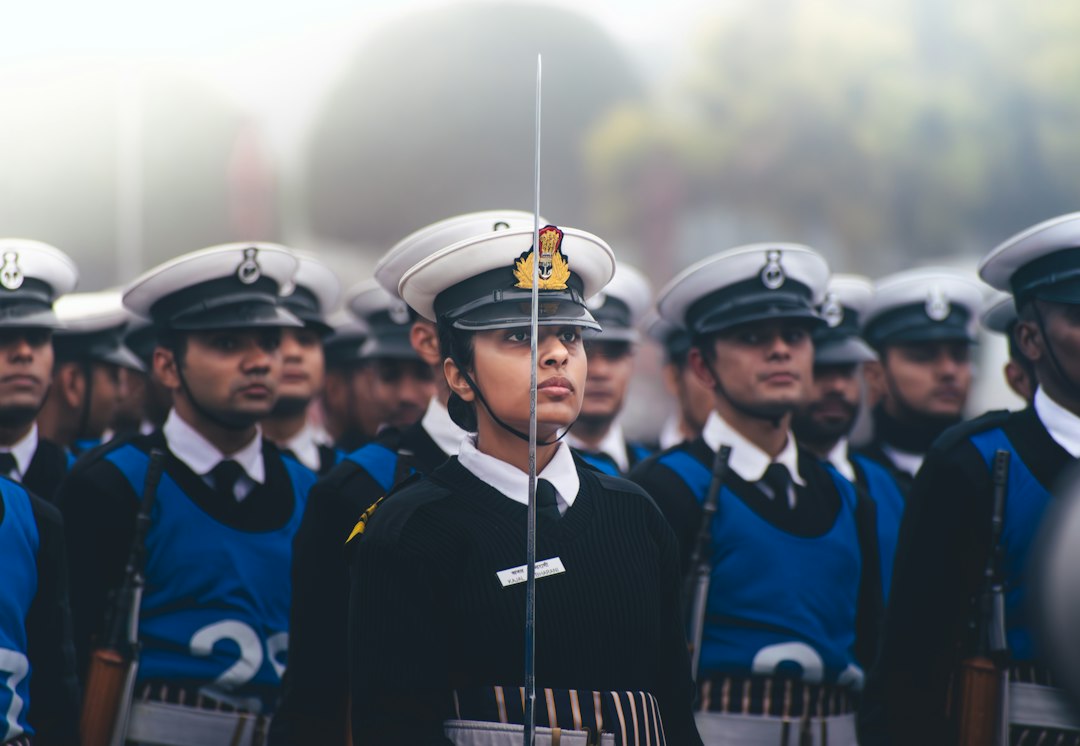
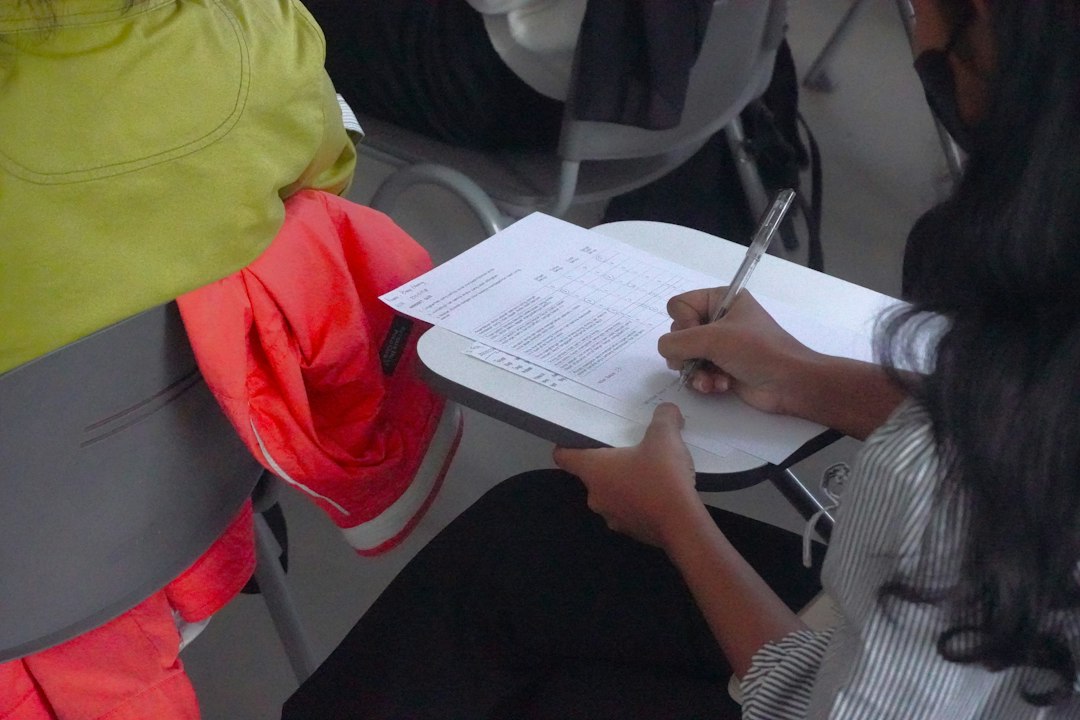
The SSC GD selection process 2027 has four stages – a Computer Based Test, the Physical Efficiency Test, the Physical Standard Test and a Detailed Medical Examination. This page explains each stage in order, what qualifies you for the next stage and the documents involved.

Quick Answer
SSC GD 2027 selection goes through CBT (80 questions, 160 marks), PET and PST, Detailed Medical Examination and document verification. Only the CBT score is used for the final merit list; all other stages are qualifying in nature.
SSC GD 2027 Selection Process – Stage by Stage
| Stage | What happens | Key point |
|---|---|---|
| 1. Computer Based Test (CBT) | 80 objective questions, 160 marks, 60 minutes | Only scoring stage; merit is drawn from here |
| 2. Physical Efficiency Test (PET) | Running – male 5 km in 24 minutes, female 1.6 km in 8.5 minutes | Qualifying in nature |
| 3. Physical Standard Test (PST) | Height, chest and weight measurement | Qualifying in nature |
| 4. Detailed Medical Examination (DME) | Medical fitness as per CAPF standards | Rejection risk is highest here |
| 5. Document Verification | Original certificates and eligibility check | Any mismatch cancels candidature |
CBT Exam Pattern (SSC GD)
Each correct answer carries 2 marks and 0.25 marks are deducted for every wrong answer. The paper is bilingual, so the English/Hindi section can be attempted in either language.
| Section | Questions | Marks |
|---|---|---|
| General Intelligence & Reasoning | 20 | 40 |
| General Knowledge & General Awareness | 20 | 40 |
| Elementary Mathematics | 20 | 40 |
| English / Hindi Language | 20 | 40 |
| Total | 80 | 160 |
Special Instructions for the Physical Stages
- PET and PST are usually conducted on the same day at the same centre, so plan your travel and stay accordingly.
- Candidates who clear PET/PST are medically examined in the order of their CBT merit.
- A temporary disqualification at DME can sometimes be reviewed by a Review Medical Examination (RME), if permitted by SSC.
- Keep the call letter, photo ID and photocopies of the physical fitness related documents in one file.
Medical Examination Standards at a Glance
| Parameter | Requirement |
|---|---|
| Vision | Prescribed distant and near vision in each eye; colour blindness is a disqualification |
| Hearing | Normal hearing in both ears |
| Teeth | At least 14 healthy teeth |
| Chest | Well formed with prescribed expansion for male candidates |
| Limbs and joints | Full movement without deformity; knock knees and flat feet disqualify |
| General health | No hernia, hydrocele, varicose veins or uncontrolled chronic condition |
Documents Required at Each Stage
| Stage | Documents to carry |
|---|---|
| CBT | Printed admit card and a valid photo ID |
| PET / PST | Call letter, photo ID, medical fitness related documents and photocopies |
| Detailed Medical Examination | Call letter, all original certificates and photographs |
| Document Verification | Class 10 certificate, category certificate, domicile proof, NOC if employed |
What Happens If You Are Not Selected at a Stage
- Failure at PET or PST ends your candidature for that cycle; there is no second attempt in the same recruitment.
- A temporary medical condition such as an infection or injury can sometimes be reviewed through a Review Medical Examination if SSC provides for it.
- A permanent medical disqualification bars selection in that cycle.
- Candidates who clear all stages but are not in the merit list can apply again in the next cycle, subject to age eligibility.
Stage-wise Elimination: Where Candidates Usually Drop Out
| Stage | Candidates who clear it | Main reason for elimination |
|---|---|---|
| CBT | Around 15 to 20 per cent of applicants | Negative marking and low cutoff score |
| PET and PST | Most CBT qualifiers | Height, chest or 5 km timing |
| DME | A small fraction | Vision, teeth or general health |
| Document Verification | Almost all who reach it | Only mismatch in details or age |
| Final merit | Ranked list | Aggregate CBT score and force preference |
The physical test removes more candidates from a GD cycle than the written exam does. Start running batches in parallel with CBT preparation, not after the result.
Document Verification Checklist
- Matriculation (10th) certificate and marksheet, original plus two copies.
- Caste certificate in the prescribed central format, for relaxation.
- EWS certificate issued in the current financial year, where applicable.
- Domicile certificate for a state-wise vacancy claim.
- Photo identity proof such as Aadhaar, PAN, passport or driving licence.
- Passport-size photographs matching the uploaded one.
- Serving candidates: No Objection Certificate from the employer.
Detailed Medical Examination: What Is Checked
| Check | Standard applied |
|---|---|
| Height | 170 cm male, 157 cm female, with regional relaxations |
| Chest | 80 cm with 5 cm expansion, male candidates |
| Vision | 6/6 better eye, 6/9 worse eye, no colour blindness |
| Teeth | At least 14 healthy teeth in each jaw |
| Hearing | Normal in both ears |
| General health | No flat foot, knock knee, varicose veins or hernia |
DME is a pass-or-fail check, not a ranking test. A candidate with the highest CBT score can still be removed here on a single deficiency.
Where Marks Count and Where They Do Not
The GD selection is a mix of competitive and qualifying stages. Knowing which stage actually adds marks saves you from over-preparing for the wrong thing.
| Stage | Nature | Does it change your rank? |
|---|---|---|
| Computer Based Test | Competitive | Yes — this is the only stage that decides rank |
| PET and PST | Qualifying | No. You either clear it or you do not |
| Detailed Medical Examination | Qualifying | No |
| Document Verification | Qualifying | No |
| Final merit | Based on CBT | Yes — rank, force and state allocation follow the CBT score |
Because only the CBT carries marks, a candidate who scores 150 but runs 5 km in 26 minutes is out, while a candidate with 120 who runs in 22 minutes is in. Never treat the physical stage as a formality.
Physical Test Day: Schedule, Documents and Ground Rules
The PET and PST are conducted by the regional SSC or the force nominated for your region, usually over one or two days. The ground rules are strict and enforced.
- Report at the ground at the time printed on your admit card, in sports kit.
- Carry the admit card, photo ID, photographs and any medical fitness certificate asked for in the notice.
- Height, weight and chest are measured first, in shoes removed and with no cap or turban other than what the notice allows.
- The race follows, in a single attempt in most regions, timed electronically or with manual officials.
- Results are noted on the spot and you are asked to sign the record sheet.
| Rule | What it means for you |
|---|---|
| No second attempt | Train to finish comfortably, not just barely inside the limit |
| No re-measurement on request | In most regions the measurement recorded on the day is final |
| Dress code | Sports kit and running shoes; no spikes |
| Weather | Sessions run in rain and heat, so practise in both conditions |
If you fail at the physical stage, the commission does not provide another date. Your only option is the next recruitment cycle, which for GD means roughly a year.
How Force Allocation Actually Works
A common misunderstanding is that the force you prefer is the force you get. Allocation follows a set order, and the preference column only decides the order of consideration.
| Step | What happens |
|---|---|
| 1. Merit list | All qualified candidates are arranged by CBT score, within their state pool |
| 2. Vacancy availability | Posts are counted state-wise and force-wise from the official table |
| 3. Preference matching | Your recorded force order is checked from the highest-ranked preference |
| 4. Allocation | If your first preference has no seat left at your rank, the next preference is considered |
| 5. Posting | The allocated force assigns your training centre and, later, your unit |
- List at least five or six force preferences rather than one or two.
- A candidate with a lower score can be allocated a preferred force if a candidate with a higher score did not list it.
- Community feelings about a force should not decide the order — posting location and work profile matter far more over a career.
After Selection: Training and Joining
| Stage | What happens |
|---|---|
| Allocation letter | The force informs you of the training centre and reporting date |
| Basic training | Roughly six to nine months of physical, drill and academic training |
| Stipend period | Training-period pay is credited as per the force’s rules |
| Posting | After training, a unit or battalion posting is assigned |
| Probation | A probation period applies before the appointment is confirmed |
Training standards are far stricter than the recruitment test. Candidates who clear the PET by a few seconds often struggle in the first weeks of training, which is another reason to build a comfortable margin before the test day.
Master Document Checklist for Every Stage
| Document | CBT | Physical test | Verification | Medical |
|---|---|---|---|---|
| Admit card | Yes | Yes | Yes | Yes |
| Photo identity proof | Yes | Yes | Yes | Yes |
| Passport photographs | Some centres | Yes | Yes | Yes |
| Matric certificate and marksheet | No | No | Yes | No |
| Category certificate | No | No | Yes | No |
| Domicile certificate | No | No | Yes | No |
| NOC (if serving) | No | No | Yes | Yes |
| Medical records (if any) | No | No | No | Yes |
Carry three photocopies of every certificate along with the original. Many centres keep one set, and photocopy shops outside exam venues charge heavily on the day.
Which Stage Rejects the Most Candidates
Looking at a full GD cycle, the rejections are not spread evenly. One stage removes far more candidates than all the others combined.
| Stage | Share of total rejections | Main cause |
|---|---|---|
| Application screening | Small | Bad photograph, payment failure, ineligible category |
| CBT | Moderate | Cut off and negative marking |
| Physical test | Largest | Running time, height or chest measurement |
| Medical | Small | Vision, teeth, general health |
| Verification | Very small | Certificate mismatch |
The practical conclusion is simple: give the physical preparation the same seriousness as the written paper. Most candidates spend months on GK and weeks on running, and it is the other way around in terms of rejection risk.
Preparing for CBT and the Physical Test Together
The two preparations do not compete if you plan the week properly. A split that works for most candidates is six days of study and six mornings of running, with one rest day.
| Time | Activity | Duration |
|---|---|---|
| Early morning | Running or interval training | 45 to 60 minutes |
| Mid-morning | Reasoning and maths practice | 2 hours |
| Afternoon | GK and current affairs | 1.5 hours |
| Evening | Sectional test or revision | 1 hour |
| One day a week | Rest and full-length mock test | As needed |
- Do strength work three times a week to protect knees and shoulders.
- Never skip the mock test to run — both are important and the schedule has room for both.
- Track your 5 km time every Saturday so that the improvement is visible and motivating.
Related Job Hubs
Browse all 40 job hubs: All Job Hubs — jobs by qualification, sector and state
Related new hubs: Government Job Document Checklist, Agniveer Recruitment 2026, Railway Group D Jobs 2026.
Frequently Asked Questions
How many stages are there in SSC GD selection?
Five – CBT, PET, PST, Detailed Medical Examination and document verification. Only the CBT is a scoring stage.
Is there an interview in SSC GD?
No. There is no interview or group discussion stage in SSC GD recruitment.
What happens if I fail PET?
Candidates who do not qualify the PET are not allowed to appear for the remaining stages of the recruitment.
Are PET and PST conducted at the same centre?
Yes, generally both physical tests are held at the same centre on the same day as per the call letter.
What is the weightage of the CBT score?
The final merit list is based only on the CBT marks, after normalisation across shifts. Physical and medical tests are qualifying.
Can I choose my force in SSC GD?
You give force preferences in the application. Allocation follows merit and only the forces you listed are considered.
Is the physical test held before the written exam?
No. PET and PST are conducted only after the CBT result, so candidates who clear the written exam proceed to them.
What is the validity of a caste certificate for SSC GD?
Any valid certificate in the central government format is accepted, and no yearly renewal is required.
Does the SSC GD physical test carry marks?
No. PET and PST are qualifying stages. Only the Computer Based Test marks decide your rank.
What happens if I clear the CBT but fail the physical test?
Your candidature ends at that stage for the cycle. There is no second attempt in the same recruitment, and you would have to apply in the next cycle.
Can I be posted in a state of my choice in SSC GD?
Your state pool is decided by the state or region you fill in the application, and your force is decided by merit and preference. Exact district or unit posting is decided by the force.
Should I start physical preparation before the SSC GD written exam?
Yes. Starting before the result gives you four to six months of training time, and the physical test is the stage that eliminates the most candidates.
What documents do I need at the SSC GD physical test?
The admit card, a photo identity proof, passport photographs and the fitness or declaration form mentioned in your notice.
SSC GD 2027 – Related Guides
- SSC GD 2027 Complete Guide – notification, syllabus, physical standards and salary in one place
- SSC GD Vacancy 2027 – state-wise, force-wise and category-wise break-up
- SSC GD Physical Test 2027 – Height, Chest, Running Standards
- SSC GD Salary 2027 – In-Hand Pay & Allowances
- SSC GD Cut Off 2027 – State-wise Safe Score
Official Sources
Last updated: 18 September 2026. Dates marked “expected” are based on the SSC Examination Calendar 2026-27 and are tentative until the official notification is published. Always verify the final details on ssc.gov.in.